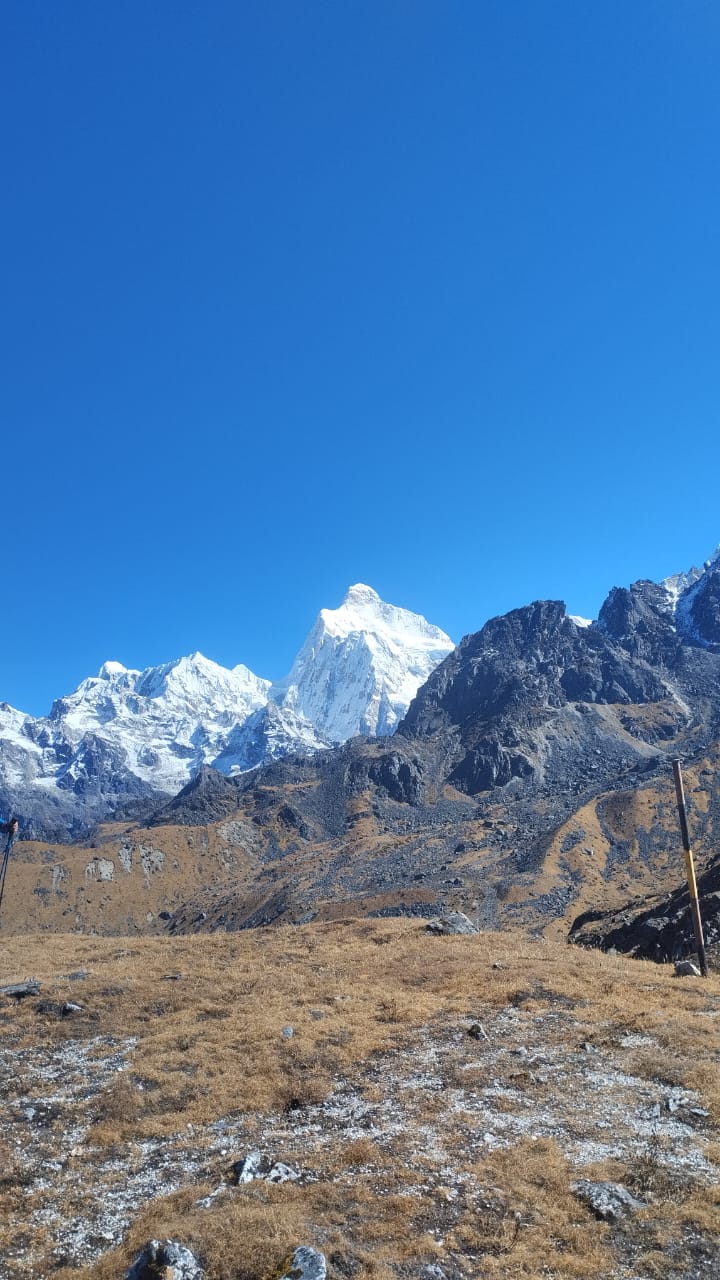
Best time for Kanchenjunga North Base Camp trek
The Kanchenjunga North Basecamp trek is a premier off-the-beaten-path trek leading your trail to one of the staggering sights among trekking in Nepal, to the foot of third third-highest peak in the world. This 16-day journey navigates through the deep gorges of the Ghunsa Khola, pristine rhododendron forests, and high-altitude glacial moraines within a restricted conservation area.
It offers a rare blend of cultural immersion in the SharePoint member villages and unmatched views with the vertical north face of Mount Jannu (7,710m) and the Kanchenjunga massif.
Autumn: The Golden Window (October-November)
Considered as one of the best times for the Kanchenjunga North Basecamp trek, the visibility is crystal as post-monsoon winds sweep the atmosphere clean, making the views crisp and giving glimpses of Kanchenjunga and Jannu. While the days are crisp and pleasant, nighttime temperatures at Lhonak and Pangpema can drop to -10 to -15°C.
This time also gives you an advantage for high-altitude photography and crossing technical sections of the trail without the risk of heavy snow or rain.
Spring: the floral bloom (late March-May)
As for the spring, the trail from Suketham to Amjilosa is decorated by nature with vibrant and colorful giant rhododendron flowers and orchids bloom. The wildlife too is active as the starts to coat the surroundings, you might even get to witness the rare red panda or the Himalayan blue sheep.
As for the weather the it is warmer than Autumn, but clouds tend to build up in the afternoon. You might encounter leftover snow on the final approach to Pangpema.
Timing matters in Eastern, and here’s why
The Kanchenjunga is the first major massif to be struck by the waves of the Indian monsoon in eastern Nepal, which means the rainy season starts early and lasts longer than in western Nepal. June and September are often too wet for a safe trek.
By mid-December, the tea houses in Lhonak and Khambachen usually close as the owners descend to Ghunsa or Phidim to escape the deepest snow, marking the time for winter closure.
Booking and logistics
Permit requirement and group policy
Original passport: You will have to arrive mandatory at least two business days before the trek so we can process your restricted area with your restricted area permit with your passport.
Minimum Group size: Government regulation requires for minimum of two trekkers to issue a Kanchenjunga restricted area permit. If you are a solo traveler, please let the agency know so that you can be matched with a group.
Gear and Equipment Checklist
Footwear: Durable, waterproof trekking boots (broken-in) and lightweight shoes for evenings.
Layering: Moisture-wicking base layers, a heavy down jacket (rated for -15°C), and breathable waterproof.
Accessories: Polarized UV sunglasses (essential for glacial glare), a warm fleece beanie, and thermal gloves.
Tech: A high-capacity powerbank and a universal adapter (charging is limited past Yamphuding).
Personal: Water purification tablets or a filtered bottle (Lifestraw) to minimize plastic waste.
Health, altitude emergency, and safety protocol
Acclimatization: Our 13-day itinerary includes are built-in rest day in Tseram 3,270 m to ensure your body and just before the final push to Oktang.
Oxygen monitoring: In the event of AMS (Acute Mountain Sickness), we have a direct line to a Kathmandu-based helicopter.
Physical preparation & Fitness
Grade: This is a strenuous trek. While it is shorter than the full circuit, you’ll be gaining altitude rapidly.
Cardio: It’s recommended for 3-4 sessions of aerobic exercise (running, swimming, or cycling) per week, starting 2 months before departure.
Leg strength: Focus on squats, lunges, and step-ups. Practise hiking with a weighted backpack to simulate trail conditions.
A typical day at the destination
On your Kanchenjunga North Base Camp trek, your typical day begins after waking up at around
The early morning (6 am- 7 am)
The wakeup: The sound of the Tibetan mastiff barking in the village will usually act as the morning wake-up call in the village. It is cold if you are past the Ghunsa.
The ritual: you pack your duffel bag before breakfast. Because this is a camping-style or basic tea-house trek, efficiency is key. You’ll likely hear the porters or kitchen crew is already busy outside.
Breakfast: A communal affair in the dining hall (often Centred around a wooden-burning stove). For the breakfast menu, you’ll have Tibetan bread with honey or jam, oatmeal porridge, or boiled eggs. The drink you will have is hot lemon tea or weak instant coffee to warm your hands
The morning push (7:30 a.m. to 12:00 p.m)
Hitting the trail: you will start working around 7:30 or 8:00 a.m., the sun textile while to hits the valley floor, so you often start in a cool Shadow, bundled in layers.
The terrain: The north pole is famous for its flat little bit and a little bit down, sometimes narrow and directly covered by cliffsides surrounded by bamboo and rural forest. It’s humid and lush.
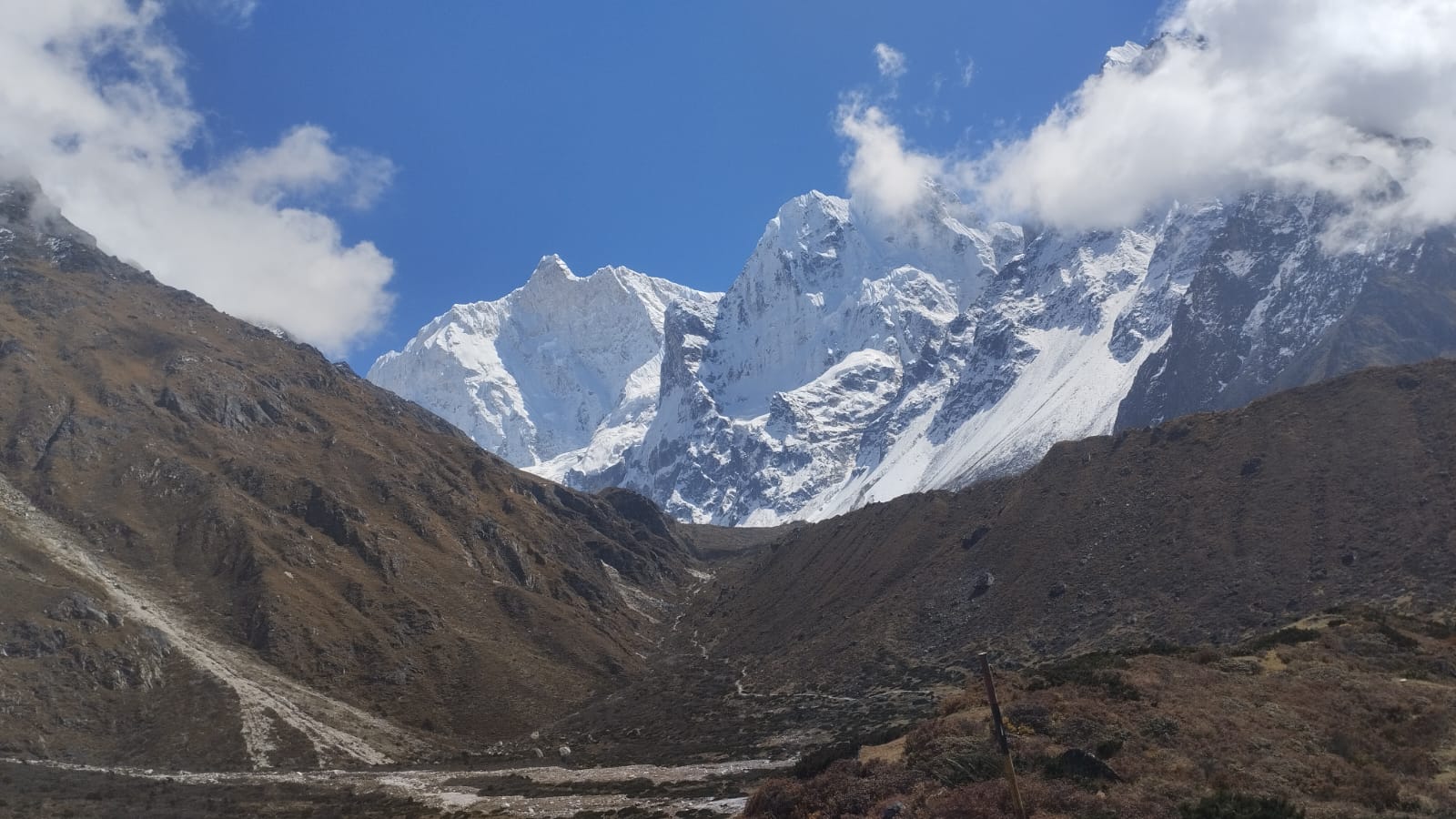
Higher elevation: After Ghunsa, the trees vanish. You enter the wide glacial valleys. The path turns to loose scree and rocky moraine. To your right, the massive north face of Mt.Jannu (Kumbhakarna) dominates the skyline, which is a vertical wall that kinda looks terrifying
The Vibe: It is serene and calm in the vicinity, as you might be on foot for around 2-3 hours without seeing a single trekker outside your group. The only traffic is a caravan of yaks carrying supplies to the outpost at Lhonak.
The lunch Stop (12:00 p.m. to 1:00 p.m)
Compared to the Everest region, you will get a bit of a lesser range of choices in a kitchen setup prepared by the crew by the river.
The meal: It is almost always a hot meal, not a sandwich. Expect Pride noodles, boiled potatoes with Chili pastor related version of rice, and lentils.
Rest: You will take your boots off to air out your feet. This time is to reapply on screen at the 4000m+; the UV rays are brutal.
The afternoon slog, 1:00 p.m. to 4:00 p.m
The wind: As the typical in the Himalayas, the Wind picks up in the afternoon. On your way to Lhonak or Pangpema, the headwinds blowing off the glaciers can be fierce and dusty.
The Challenge: This is usually the part of the day physically. The oxygen is thinner, your legs will be tired, and the trails are often involved in crossing landslide areas, shifting glacial debris.
Wildlife: Keep your eye on the regions. This region is a prime blue sheep (Bharal) territory. If you are quiet and lucky, you’ll get to witness the snow leopard, The Ghost of these valleys
Arrival and evening 4:00 p.m. to 8:30 p.m.
Arrival: You will reach your tea house or Camp at places like Khambachen or Lhonak
Immediate priorities: Change out sweaty base layers immediately before your body temperature drops, and put on your jacket. Tea and biscuits are served upon arrival, a lifesaver for energy.
Dinner: Around 6:30 p.m. The staple is price lentils, curry, and it is all you can eat, and your guide does encourage you to eat more for the energy in these remote areas. The vegetables are often dried or seasonal.
Socalizing: There is no Wi-fi. The evening entertainment is talking to the local Sherpa or Tibetan owners, playing cards with porters, or reading by headlamp.
Sleep: By 8:30 pm, everyone is in their sleeping bags. It gets pitch Black and cold outside.
Kanchenjunga North Base Camp trek trip facts
-
Hotel in ktm/ lodge & Teahouses on route
-
English proficient guide and other language options available
-
Breakfast, lunch and Dinner
-
Mandatory helicopter evacuation needed
-
flight/jeep/bus
-
Kathmandu
-
Kathmandu
-
8
-
63
Kanchenjunga North Base Camp Trek overview
The North Kanchenjunga Base Camp Trek stands as the definitive “frontier expedition” for those seeking the raw, untamed heart of the eastern Himalayas. As you journey towards the base of the world’s third-highest peak (8,586m), you leave the crowded through fares of central Nepal behind for a landscape defined by the massive glaciers, vertical rhododendron forests, and the towering Yalung and Pangpema faces.
This is a high-altitude sanctuary with the Kanchenjunga Conservation Area, where the trail offers a rare 360-degree theatre of 8,000 metre giants, including front-row views of Mt.Jannu, Everest, and Makalu, far from the reach of commercialized tourism.
In 2026, Kanchenjunga emerged as the premier choice for seasoned adventurers who prioritize peace, solitude, and cultural depth. The route serves as a living museum of the Himalayan heritage, traversing the ancestral lands of the Limbu, Rai, and Sherpa communities, where ancient mountain tradition remains the fabric of daily life while the infrastructure has more integrated into the liability houses, tracking circuit, the reason maintains its of the beaten spirit challenging crackers with ragad Glacier morings and high altitude passes like Lassiya Bhanjyang and Mirgin La.
It is a journey designed for those who have already seen Everest or Annapurna and now seek a more profound, technical, rewarding connection with the mountains.
Beyond the physical challenge of the voyage to Kanchenjunga is an investment in sustainable, eco-conscious travel, with the region designated as a gift to the earth by WWF. It is a restricted area requiring special permits and a registered guide; the ecosystem remains pristine, providing a haven for the elusive snow leopard and Red Panda.
As you walk through five distinct climate zones, from subtropical cardamom farms to the frozen alpine, turn right. You are not just a visitor; you are a Pioneer sacred frontier. This trip of a transformation since it’s solitude and grandeur, ensuring that every step taken toward the world’s most massive glacier is a step into the last true wilderness of the Himalayas.
Highlights of the Kanchenjunga Base Camp Trek
- The “Twin Base Camp” Vantage
- Off-the-beaten-path solitude
- Encounter the “Ghost of the Mountains.”
- Cross the High Passes
- Authentic cultural immersion
- Scenic flight & Tea Garden transit