Why is Kanchenjunga considered a restricted region?
A restricted region or restricted area is an official designation by the government of Nepal for specific zones that require extra monitoring and special permits for the Kanchenjunga region. This status exists for 4 primary reasons:
Border Sensitivity (Geo-politics)
The Kanchanjunga Circuit is located in the far east and corner of Nepal, directly bordering Tibet, China to the north and Sikkim, India to the East. Because of the proximity to the international boundaries, the government maintains a restricted status to monitor Movement to ensure National security and prevent illegal border persons.
Preservation of rare wildlife
The entire route lies within the Kanchenjunga conservation area (KCA), one of the most biodiverse regions in the Himalayas. It is a sanctuary for endangered species like the snow leopard, Red Panda, and Himalayan black bear.
By classifying it as a restricted area, the government can control the volume of tourists to control the flow, ensuring that mass tourism doesn’t disturb habitats.
Safety and remoteness
Kanchenjunga is one of the most remote areas in Nepal. Infrastructure is minimal, and communication can be challenging. The government designates it as restricted to ensure that:
No solo trekking
You are legally required to have at least two trekkers in your group.
Mandatory Guides
You must be accompanied by a licensed guide hired through a government-registered agency.
Tracking
The permit system enables authorities to know exactly who is in the region in case an emergency evacuation (helicopter rescue) becomes necessary.
Here are the descriptive five-line topics for the key landmarks of your 24-day Kanchenjunga expedition, incorporating the 2026 industry standards and elevations.
Ghunsa: The Sherpa Culture Epicenter (3,595m/11,794 ft)
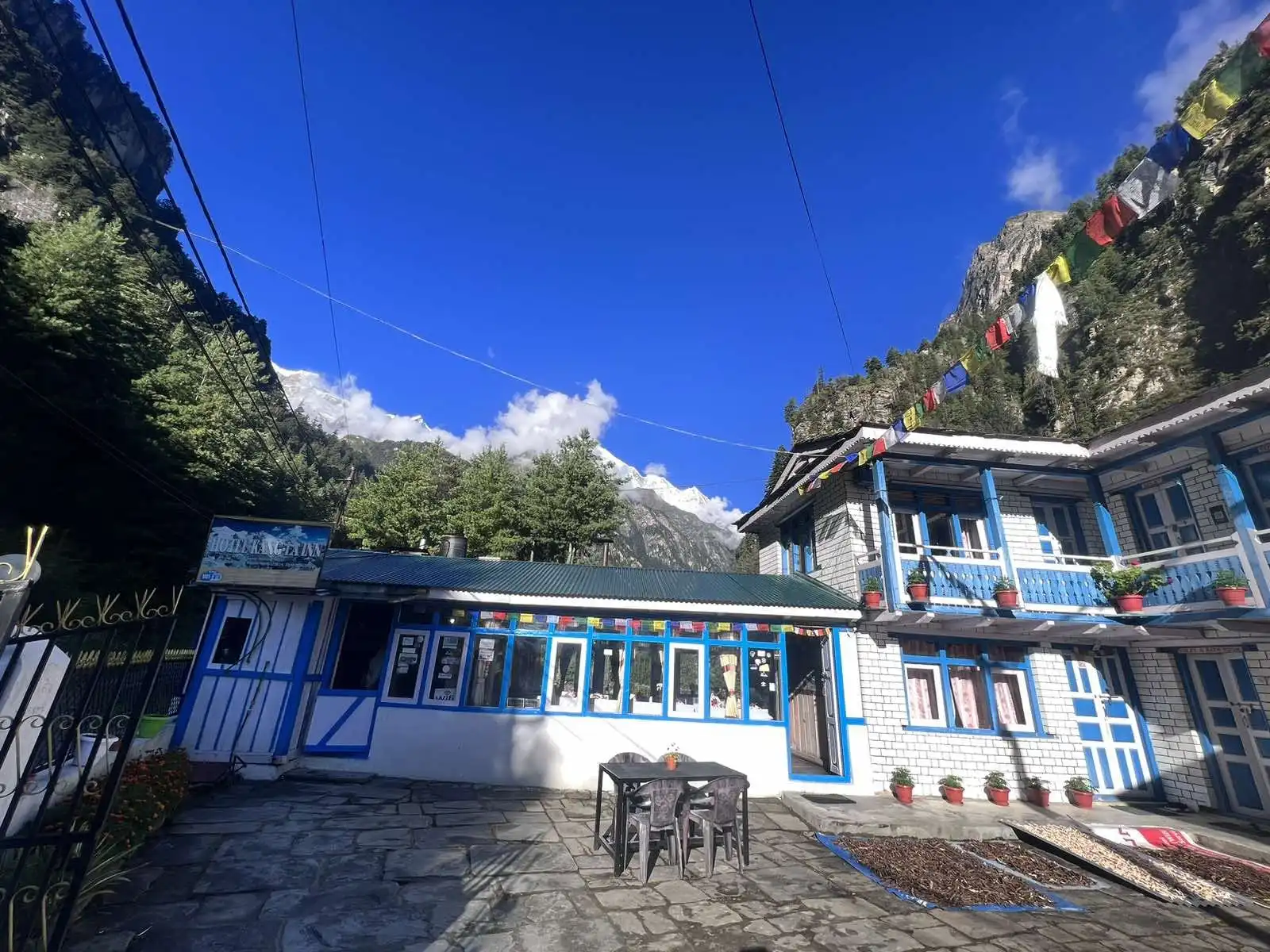
Ghunsa serves as the most significant Sherpa settlement in the region and a critical gateway for the high altitude acclimatization. Characterized by traditional wooden houses, fluttering prayer flags, and a historic Buddhist monastery, the village offers a profound look into the lives of the Bhotia people.
It is the last major outpost where trekkers can enjoy relative comfort and teahouse hospitality, before pushing into the raw Alpine wilderness.
The village is famously surrounded by dense larch and Pine forest, which provides a stark, beautiful contrast to the towering rock walls that frame the valley.
Spending an extra night here is a non-negotiable step for any successful double base camp expedition.
Taplejung: The great way to the far East 1,820 m/ 5,971 ft)
As the district headquarters and primary logistical hub for the region, Taplejung is where an urban energy area of Nepal meets the rugged trailhead.
This bustling hilltop town is surrounded by fertile ridges known for the cardamom plantations and the world-famous Emerald tea Gardens of Ilam.
It serves as a cultural melting pot whereLimbu, Rai, and Sherpa communities converge for trade and local festivals. For the land-based trekkers, arriving here marks the end of the long drive from the plains and the start of the remote trek.
The town provides the last opportunity for trekkers to stock up on supplies or use the ATM services before entering the restricted zone.
Kang-chen-dzo-nga: The High Kingdom of the Five Treasures
Standing as the world’s third-highest peak, Mount Kanchenjunga is more than just a mountain; it is a sacred deity revered by the people of Nepal and Sikkim. Its name translates to the “Five Treasures of the Great Snow,” Symbolising the five repositories of gold, silver, gems, grain, and Holy books.
The massif is unique for its massive cross-shaped ridge system, which creates a complex landscape of vertical faces and hanging glaciers.
Unlike the commercialised slopes of Everest, Kanchanjanga maintains an aura of untouchable Majesty, which climbers traditionally stop short of the Summit to honor its sanctity. For trekkers, its massive presence dominates the Horizon for nearly three weeks, offering a scale of grandeur that is unmatched elsewhere.
Pangpema: The North Base Camp Viewpoint (5,143m/ 16,873 ft)
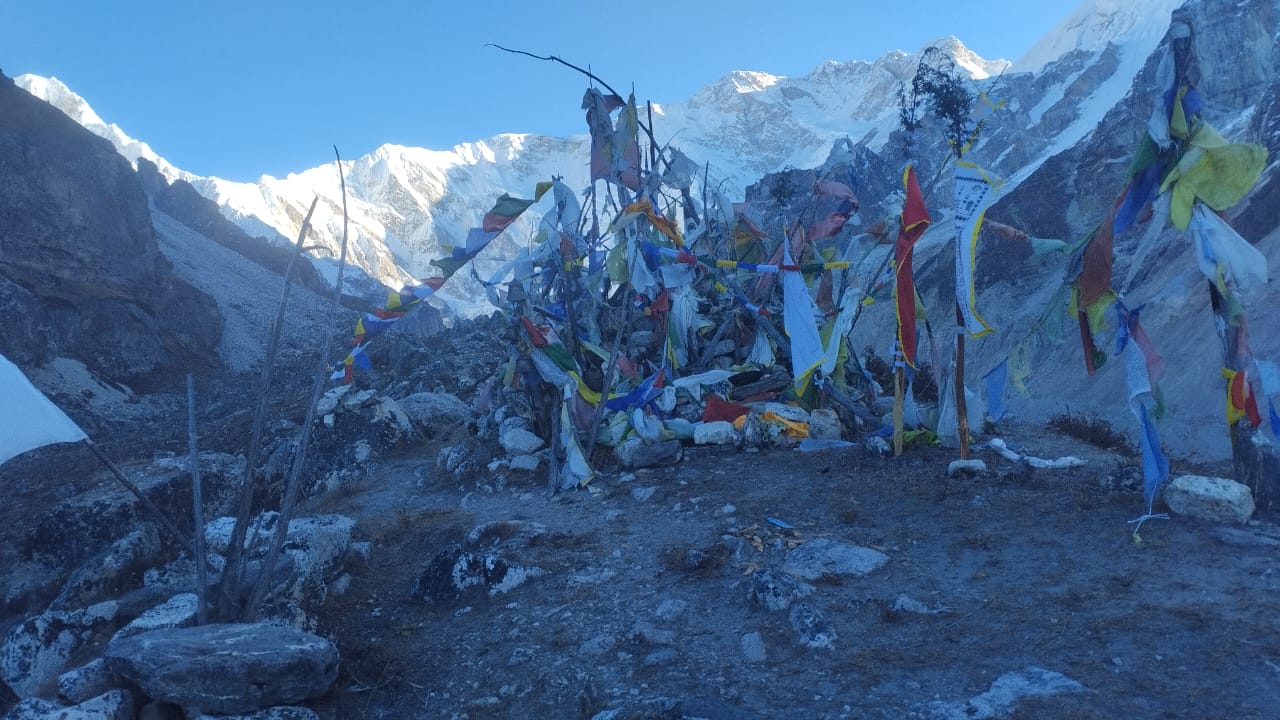
It is the ultimate destination of the north circuit, serving as a high-altitude base camp for the expedition tackling the mountain’s formidable North Face. Reaching this flat and plateau requires navigating the lateral moraine of the Kanchenjunga Glacier, a journey that feels like walking on another planet.
From this vantage point, the share vertically of the mountains’ icewalk creates a natural amphitheater that is both humbling and awe-inspiring.
Pangpema is the ultimate destination of the North Circuit, serving as the high-altitude base camp for expeditions tackling the mountain’s formidable North Face. Reaching this flat, sandy plateau requires navigating the lateral moraine of the Kanchenjunga Glacier, a journey that feels like walking on another planet.
From this vantage point, the sheer verticality of the mountain’s ice walls creates a natural amphitheater that is both humbling and awe-inspiring. It is the highest point of the 24-day trek, offering a front-row seat to the “Great Snow” and the surrounding peaks like Nepal Peak and Wedge Peak.
The silence at Pangpema, broken only by the occasional crack of moving glacial ice, is the definitive experience of Himalayan solitude.
The Glaciers: Rivers of Ancient Ice
The Kanchenjunga region is defined by its massive glacial systems, most notably the Kanchenjunga Glacier in the north and the Yalung Glacier in the south. These “rivers of ice” are responsible for carving the deep, U-shaped valleys you traverse and feeding the raging Ghunsa and Tamur river systems.
Trekking alongside these glaciers offers a firsthand look at the raw power of geological change, with the trail often crossing debris-covered moraines and grey glacial silt.
In 2026, these glaciers remain a focal point for environmental study and a highlight for trekkers who appreciate the rugged beauty of the high-alpine desert. Their turquoise meltwater lakes and towering ice seracs provide some of the most dramatic photographic opportunities on the entire circuit.
NBC: North Base Camp Trekking/Expedition Hub (5,143m/16,873 ft)
Commonly referred to as NBC, the North Base Camp is the strategic heart of the trek’s first half and the ultimate test of physical endurance. Reaching this remote outpost signifies the completion of the “ascension phase” through the northern wilderness of Eastern Nepal.
The camp is situated in a high-altitude wilderness where oxygen levels are roughly half of those at sea level, making every step an exercise in mental fortitude.
It serves as a sanctuary for elite mountaineers and intrepid trekkers alike, offering a “summit-like” feeling without the need for technical climbing gear. Standing at NBC provides a 360-degree view of the massif, cementing its status as one of the most rewarding viewpoints in the entire Great Himalaya Trail.
Sele La Pass: The high-altitude gateway (4,480m/14,698 ft)
The Sele La Pass is the crucial bridge that connects the northern and southern halves of the Kanchenjunga Circuit. Crossing this pass is often the most demanding day of the 24-day itinerary, as it involves navigating a series of high ridges,s including the Sinion La Pass and Mirgin La Pass.
The trail is characterized by steep, rocky ascents and, frequently, ankle-deep snow, requiring trekkers to possess strong stamina and steady footing. However, the reward for this exertion is a “balcony view” of the Himalayas, where on a clear day, the silhouettes of Everest, Lhotse, and Makalu appear on the western horizon. It is a remote and silent section of the trek, far from any permanent settlements, where you are truly at one with the high peaks.
Altitude sickness and measures
Ranking third highest in the world and second in altitude in the context of Nepal, with an elevation above 8,000 meters, Kanchenjunga is considered one of the hardest and most brutal in-terms of expedition in Nepal.
Even veteran climbers who have been to several expeditions often state that the Kanchenjunga is much more arduous than the Everest, with severe risk of high physical as well as psychological toll on the body, altitude, and health conditions related issues being the obvious issues.
Info Nepal has veteran guides with over multiple decades of climbing experience and the ability to take situations under control when they seem to escalate, and also deal with the operations needed to help deal with it, as they are pre-equipped with the knowledge about preventive measures and solutions.
It’s recommended for climbers to immediately notify their guide or at least the companion near them if they start to witness any of the signs and symptoms.
Signs/symptoms like the following might be detected:
- Nauseous and dizzy
- Weakness, fatiuge and limping
- Shortness of breath
- Frequent urination and sweating indicate fluid losss
And as for the preventive measures or treatment
- Stop right after symptoms start.
- Do not ascend furthur and descend gradually
- Take medication
- Get proper rest and sleep
- Consume warm fluids and sufficient water/ dehydration liquid
Packing list for Kanchenjunga trek.
For a first aid kit, carry medications for altitude sickness like Diamox, and painkillers like paracetamol and ibuprofen to reduce common problems like headaches and, most importantly Oximeters to check and keep track of your level of oxygen in your body, as doing such helps in prventing or atleast dealing with the situations better by analyzing the symptoms whhich are majorly causedby lack of oxygen.
The trail is one of the harshest and arduous in the world as it’s the way that leads above 8,000m, which makes it obvious for the possible injuries and incidents that might be of minor to severe levels and might cause several complications, hence its advised for you to have anticeptics like betadine, antiseptic wipes band-aids, reek pads and if possiblele, sutures.
You are a trekker, and the environment is foreign, which means your body and possiblyyour immune system are not familiar with the surrounding which might even cause minor to major complications related to stomachs incase the water doesn’t sit well with your immunity and cause issues like diarrhea and several other issues leading to fluid loss.
So it’s advised for you to take extra precaution and drink onlypurified or boiled water, carry oral rehydration powders and anti-diarrheal tablets to treat such issues.
Also, for cold and cough, carry tablets and a nasal spray, and cough lozenges and petroleum jelly to protect skin from moisture loss. Carry your personal toiletries and warming linens as well as footwear, and also accessories like cameras, spare batteries for cameras, power banks, a Swiss Army knife, and hand sanitizers.
Other medical advice for the Kanchenjuna trekking by land
- Hydrate constantly at altitude; dehumidification is dangerous.
- Rest if the symptoms of AMS start.
- Do not push higher. However, provocation is not always the result of reaching the destination; your life matters if your body is warning.
- Avoid alcohol or smoking- worsens acclimatisation.
- Consult your doctor about high- altitude drug and possible side effects before the journey.
Drinking water on the journey
Drinking water will be available for you throughout the journey in different original shops to buy and refill at teahouses. But it’s advised for non-natives to buy mineral water bottles or at least boil their water before drinking, as the water is straight from the source. Might not settle with dear Physiology due to the new terrain, despite the water being clean and potable.
There are different styles to gain water to drink, as follows.
Bottled water
The most accessible way to get water is to buy bottled water available freely at original retailers. It’s advised for you to buy water at lower elevations if you want to save costs, as the price of bottled water increases with rising elevation. A bottle of water going for Rs. 100 at Lukla might bring Rs. 400 in Gorakshep.
Despite being accessible, it’s advised for trekkers to carry their refillable water trapezoids to avoid plastic waste.
Boiled water utmost tea houses offer boiled water for a small charge, but getting the boiled water is worth it beget it’s safer than unboiled water, and since generally the region is visited during cold rainfall, it’s advised to avoid drinking cold water to avoid the body from losing heat and energy.
Water from Tap or stream water sources is readily available to drink, but just like suggested aearlier it needs to be reused through some kind of feasible treatment to avoid pathogens.
Filtration process.
There are several purification styles that trekkers can use for water purification besides the ones that can be useful indeed in times of crisis, particularly for solo adventure trippers.
- Water purification tablets are quick and effective, but with a slightly chemical taste.
- Movable water filters
- Mechanical pollutants( Life Straw, Sawyer Mini)
- Ideal for sluice and valve water.
- UV sterilisers (Steripen)
- Quick and effective( takes around 90 seconds)
- Needs batteries and works best with clear water.
Tips
- Always carry a bottle or two with you. Some stretches between townlets can be long.
- Isolated bottles help with cold water at the advanced mound.
- Purification tablets stay at least 30 twinkles before drinking.
- Numerous pedestrians prefer to stay in tree-houses and purify themselves, as it’s cheaper and more sustainable.
Note: Anyone who needs to be under regular medication, please bring an acceptable quantity of the drug while on the route, and also have insurance in case of exigency evacuation by copter.
Mobile network on the Kanchenjuna trekking by land
You can buy SIM cards from an original general telecommunication store after furnishing a duplicate of your passport. As for the data- acquiring process, you’ll get instructions in the primer for the SIM card.
Ncell and NTC work up to and patchily beyond that.
Trippers frequently prefer Ncell, saying it has slightly better content in the advanced regions. Buy an original SIM card in Kathmandu with a passport copy.
Pro tip: Carry a high- capacity power bank( 20,000 mAh or further) and a solar bowl if possible. Charging is limited to above 4,000 m.
Note: Anyone who needs to be under regular medication, please bring an adequate amount of medication while on the route, and also have insurance in case of emergency evacuation by helicopter.
Currency details.
- The currency used in Nepal is the Nepalese rupee.
- Notes come in denominations like 5, 10, 20, 50, 100, 500, and 1000.
- Coins are infrequently used and not accepted in remote trekking areas.
Exchange rates.
Exchange rates change, but as of early 2025,1 USD is worth NPR 130- 135. Rates are slightly better at authorised commercial exchanges in Kathmandu compared to fields or taverns. You can exchange in Kathmandu ( especially the Thamel area), which has multiple licensed commercial changers offering competitive rates.
You can also change it at banks, but they constantly bear passport copies and may charge a small fee. ATMs are widely available in Kathmandu and occasionally, in trails, but not reliably beyond that.
On the trail.
After Taplejung, no ATM are available, and even if there are, they might not operate all the time. And also no commercial exchange installations either, cash is the only way. Only a multitude of lodges accept foreign currency. ( USD/ EUR) at low exchange rates.
Important tips.
Carry enough cash in NPR before hitting the trail. Budget for daily charges, buffer for extremes, and a tip. (Suggested 3000 to 4000 per day, sometimes even 5,000 NPR, as the expenses might vary due to unforeseen circumstances )
Dividing your cash into smaller denominations is easier for deals. Some lodges and shops might not accept NPR 1000 notes at advanced elevations.
Hiring a Guide/ Companion
Decide early, independently, or through an Agency?
- Trekking agency ( most dependable)
- Offers certified, assured attendants and janitors.
- Handles all logistics breakouts, permits, lodgment, etc.
- You pay more, but it’s stress-free and safer.
Independent Guide/ Companion
- Slightly cheaper, but you’ll need to ensure they’re certified and enduring.
- You’ll need to coordinate everything yourself( permits, journal, bookings)
- Recommended: Use a government-registered trekking agency in Kathmandu or online in advance for verified and assured staff.
2. Verifying Credentials and Experience
- Guide/companion
- Must be government- certified.
- Should have introductory English and first- aid knowledge.
- Experience in high- altitude trekking is a must- have.
Porter
- Generally, from the original Sherpa or Rai communities.
- Well-trained and strong enough to carry 20- 25 kg of loads,
- Constantly have decent English,
- Are incredibly strong and helpful.
- But still, ask for their touring licence, insurance details, and former customer reviews, if you’re reserving a single.
Trip info about the trip
-
Standard in lower regions, basic in high Alpine regions
-
Kanchenjunga RAP (Restricted Area Permit) and KCAP
-
Spring( March-May), and Autumn (October to November)
-
5,143 m/ 16,873 ft (North Base Camp)
-
5-6 hours per day
-
Kathmandu
-
English-Fluent
-
Breakfast, Lunch, Dinner
-
only guide and porter included
-
10
-
60
Trip overview
The Kanchenjunga Circuit Trek is the definitive choice for more than adventurers seeking Himalayan solitude and raw off-the-beaten experience. As the world moves towards the crowded trails, this restricted area expedition remains a sanctuary of peaks and silence in the forest and the corner of Nepal.
Circling the massive footprint of Mount Kanchenjunga (8586m/28,169 ft), the third-highest peak in the world. This 24-day journey is a masterpiece of geographical diversity, transitioning from the subtropical tea gardens to the lowlands to the high altitude, the Great Himalayan Trail. Unlike Commercial routes, the Kanchenjunga Circuit offers a rare “Double Base Camp” achievement, allowing it to stand at the foot of the Mountain from both its North and South faces.
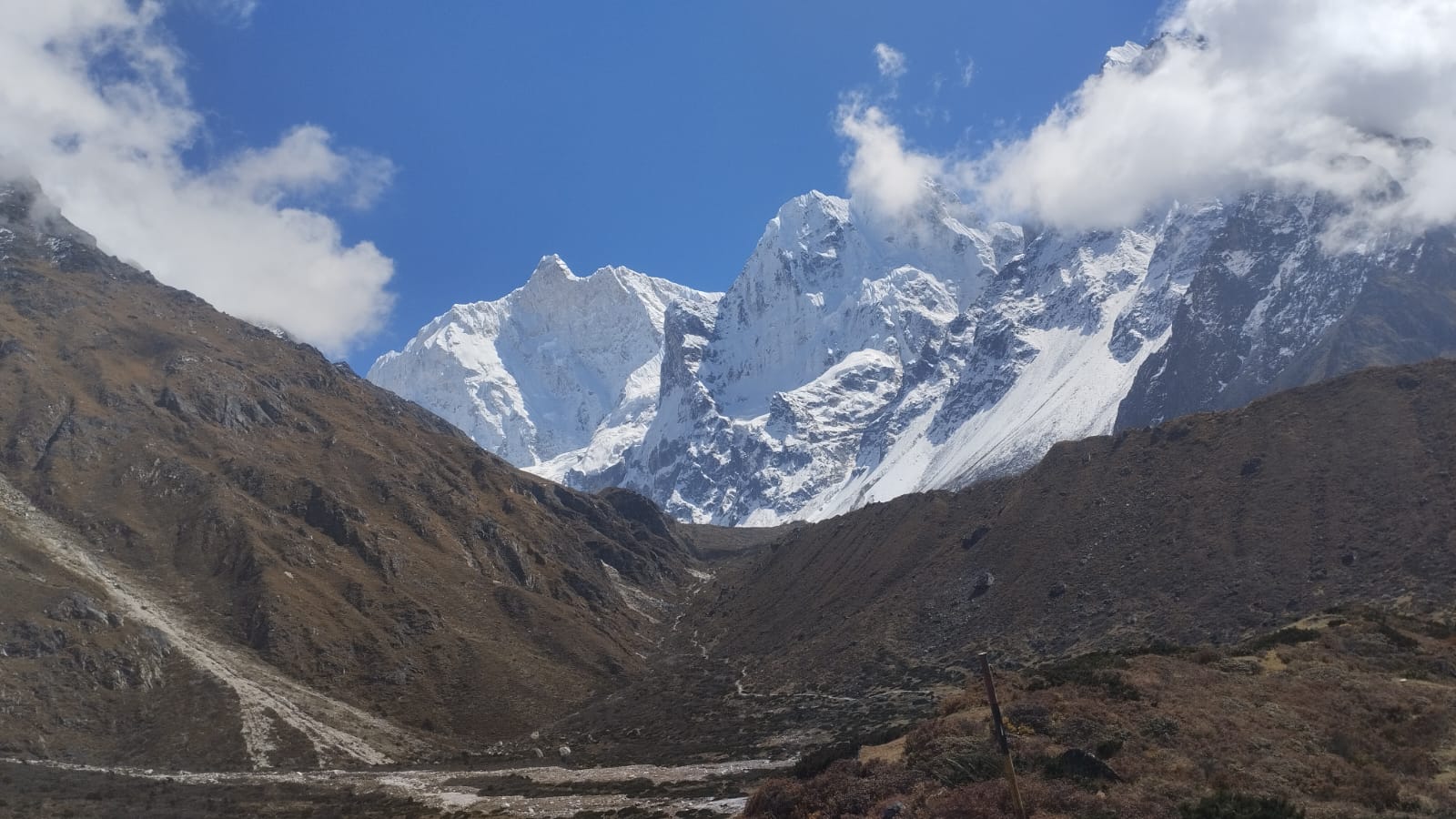
This is a strenuous expedition-style trek designed for those who value authenticity over luxury. You will navigate the high-altitude passes, walk beneath the terrifying granite walls of Mt.Jannu, and encounter a mosaic of cultures from the Limbu and Rai communities in the foothills of the Tibetan-Sherpas in the high-alpine villages.
In 2026, it remains an ultimate bucket list journey for those looking to discover the undiscovered Himalayas.
Highlights of the Kanchenjunga Trek by Land
- The triple pass challenge
- Glacial Giants and Granite spires
- The double base camp crown
- Rare Wildlife Encounters
- Unfiltered cultural immersion
- Overland scenic traverse