The Kanchenjunga Circuit is widely regarded as the ultimate frontier for experienced trekkers in Nepal. Spending approximately 220 kilometres, this high-altitude odyssey is a deep immersion into the far eastern corner of the Himalayas, bordering India and Tibet. Unlike more developed reasons, the path here remains raw and rugged, requiring a commitment of 20-26 days to navigate fully. It is a journey, defined by its massive elevation scale, starting in the subtropical warmth of the Thermal River Valley and terminating at the icy edge of the world’s third-highest peak.
The October experience
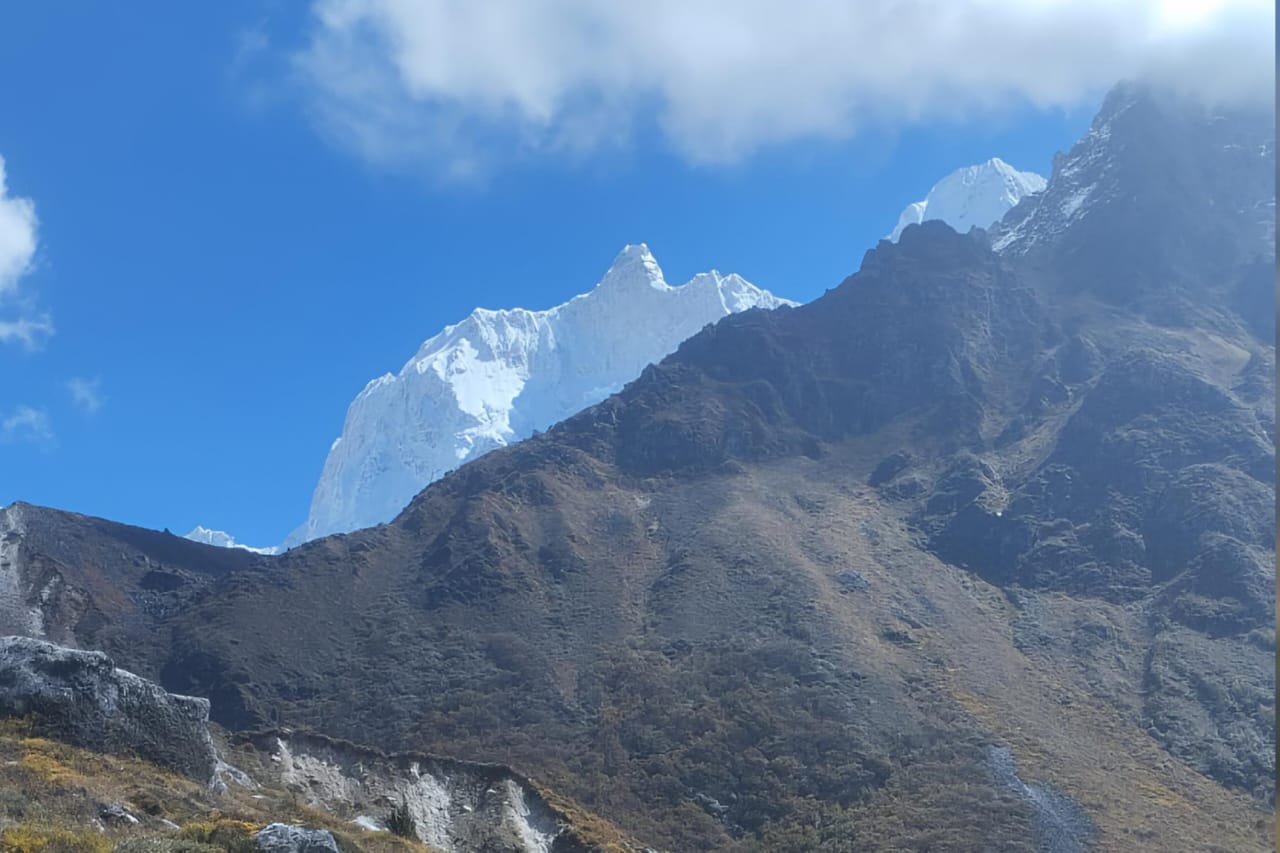
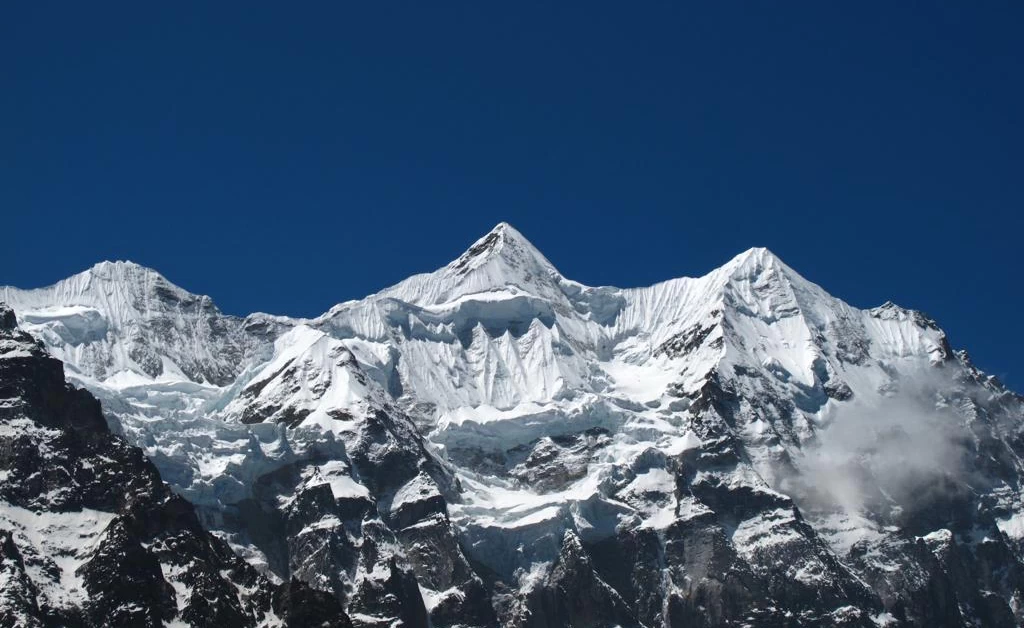
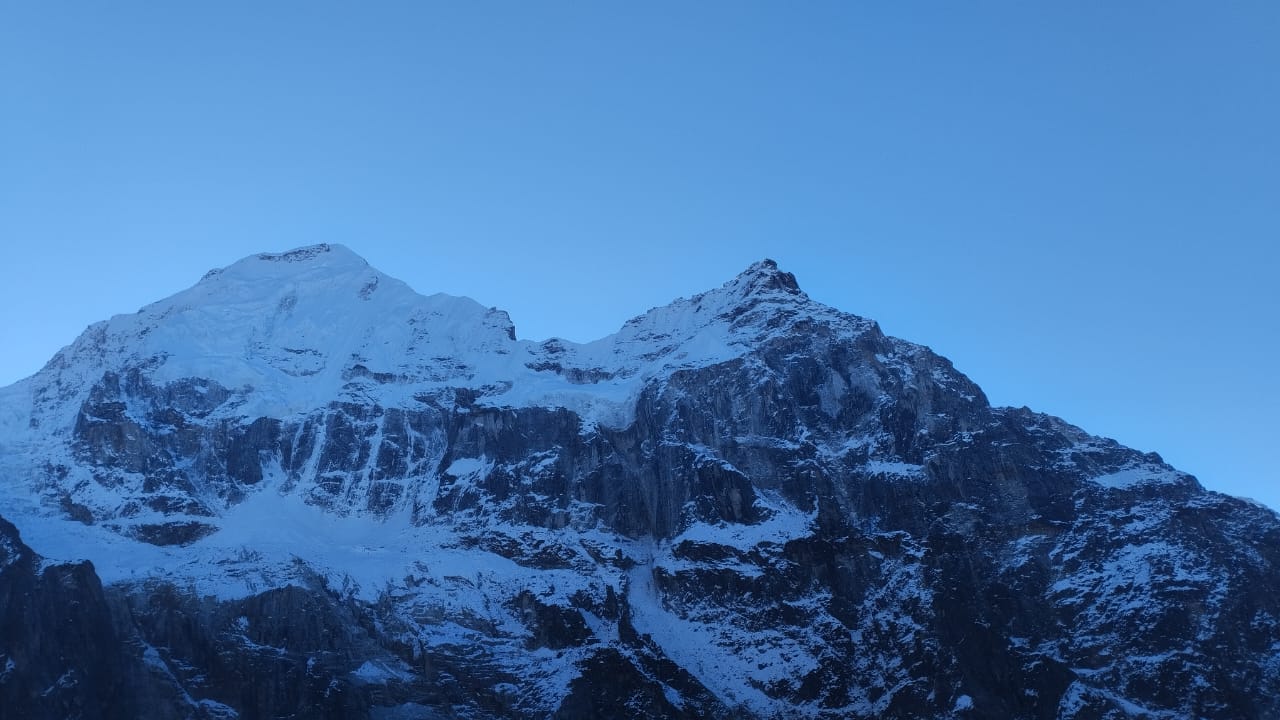
The October experience feels like a bright new day as the heavy monsoon finishes scrubbing the clouds, and the gloomy atmosphere makes the surroundings crisp and dust-free, with an unparalleled view of the Kanchenjunga massif along with the neighbouring peaks like Jannu and Makalu. Unlike the hazy afternoon of spring, October mornings and evenings are famously clear, making the month of October a premier experience for the photography enthusiast.
Apart from all the natural and topographical attractions, vivid experiences of the festivals and cultural practices during September and October give off a different joy and happiness from the surroundings due to the ambiance of major festivals like Dashain and Tihar/Deepawali, and Chhat Parva.
Moreover, if you have friends and family in Nepal, you’ll get to have the experience of receiving a tika and the hospitality of the people, which will make you feel at home. Also, one of the most important parts of the festival and culture is not to miss the traditional bamboo swing, a genuine holiday spirit among the local communities.
Weather & Climate: A detailed breakdown
As mentioned before in “The October experience,” it’s a premier month of the year due to the best stability of weather it provides, because of which it significantly reduces the issues of flight delays and also the possible turbulences during flight and travel.
You can expect a pleasant daytime range of temperature ranging between 15°C to 20°C, which is considered perfect for trekking in light layers of outfit, which will help you regulate and have easy movement while on the trail.
As the inclination keeps going, you’ll step into the alpine zone gradually, which is the altitude beyond 4,000 m The daytime remains cool and sunny (5°C to 10°C), but the temperature drops right after the sun goes down, sometimes even hitting the point of -10°C to -15°C at high elevation camps like Lhonak. While the chance of rain is minimal, you may encounter the season’s first light dustings of snow at high points, with the stunning silver finish to the rugged landscapes.
Logistics, permits, and the two-person rule
Kanchenjunga is strictly regulated to conserve and preserve its wilderness and proximity to the international borders. To obtain the mandatory Restricted Area Permit (RAP), the law requires a minimum of two trekkers in a group, accompanied by the licensed professional Nepali guide. Solo trekking is strictly prohibited.
You must process these permits through a registered trekking agency, which will also handle your Kanchenjunga Conservation Area Project (KCAP) entry fee. In 2025, the RAP cost remains approximately $20 per person per week for the first four weeks, making it one of the affordable restricted areas compared to the Upper Mustang or Manaslu.
22-day itinerary breakdown
Day 1-3: Arrival in Kathmandu, flight to Bhadrapur, and a scenic drive to the trailhead at Taplejung.
Day 4-7: Trek through tropical cardamom forest and Limbu villages to reach the Tibetan-influenced village of Ghunsa(3,475m)
Day 8-11: Acclimatization in Ghunsa followed by a steady climb to Lhonak and the final push to Pangpema (5,14m) for the North Face View.
Day 12-14: Descend back to Ghunsa, and cross the high-altitude passes of Sele La and Sionion La.
Day 15-17: Visit the South Base Camp at Oktang (4,730m) for the views of the Yalung Glacier and Kanchenjunga’s south side.
Day 18-22: A long, beautiful descent through the Forest of Empathy in ending the drive back to Bhadrapur and flight to Kathmandu.
Responsible trekking & ethics
In such a fragile ecosystem, your behaviour as a trekker is vital. Responsible trekking means adhering to “Leave No Trace” principles, particularly by using water purification tablets instead of buying plastic bottles, which are impossible to recycle in Remote zones.
Ethically, you should prioritise hiring local guides and porters from the Eastern region to ensure the economic benefit stays within this community, respect local cultures, such as walking clockwise around the Mani walls, and ask permission before taking photos of people. Ensure that the warmth and hospitality of the region remain preserved for the next adventurer.
Physical training & acclimatisation.
This is a grade 4 (strenuous) trek that requires serious preparation. Your training should begin at least three to four months in advance, focusing on cardiovascular endurance and leg strength through stair climbing, hiking with a weighted pack, and long-distance running.
The itinerary involves multiple days above 4000 metres; acclimatisation is non-negotiable. The “Climb High, Sleep Low” rule is built into a 22-day schedule with mandatory rest in Ghunsa and Kambachen to allow your body to produce the necessary Red blood cells to survive the thin air at base camps.
Guide and porter hire for the Kanchenjunga trek in October
Guide and porter for the concerns on the trek in October is not just a recommendation, it is a legal requirement, and since the region is a restricted area bordering India and Tibet. The Nepali government mandates specific logistics for every trekker.
Teahouse vs camping: Managing expectations.
While Kanchenjunga has moved toward a “Tea House” model in recent years, do not expect the luxury found in the Everest region. These are basic family-run lodges where you will sleep in twin-share rooms with thin plywood walls and common toilets. In October, this lodge can be lively and social, centering around a single wood-burning stove in the dining hall.
Camping is still an option for those seeking total solitude or wanting to stay in spots where the houses are limited. While camping offers a deeper connection to the wilderness. It is significantly more expensive and requires a full crew of porters and cooks to carry your food and shelter.
Conclusion
A Kanchenjunga trek in October is the ultimate reward for the patient hiker. Each offers a rare combination of festive cultural warmth, the year’s best mountain clarity, and the deep silence and solitude that only the world’s third-highest peak can provide.
While the physical demands are high and the amenities are rustic, the feeling of standing at the edge of the Kanchenjunga Glacier under a cloudless October sky is an experience that stays with you forever. It is quite simply the finest trekking experience that the Eastern Himalayas has to offer.